Region & Borders
The Sultanate lies in the almost permanently shadowed north of Therasya, beyond the swamp borders of Starfall and east of the Haze-torn lands, where the cold winds of Numahen and the cursed fog of Azma’arch meet. It is a harsh realm of black-red mountains, fire-stricken valleys, iron mines, fortress cities, soul towers, demon pits, and broken masses who have long forgotten the courage to question their masters. To the west, the Eastern Haze Rift erupts like a frenzied volcano across the sea. To the south lie Starfall, the Hangman’s Swamps, and the routes by which Helkorian armies have tried repeatedly to break into the lands of the free. Few nations in Therasya inspire such fear, for Helkor is not merely an enemy kingdom. It is the mortal malice of Graazt falling on Therasya like flesh-eating locusts on a rotting carcass.
History & Founding
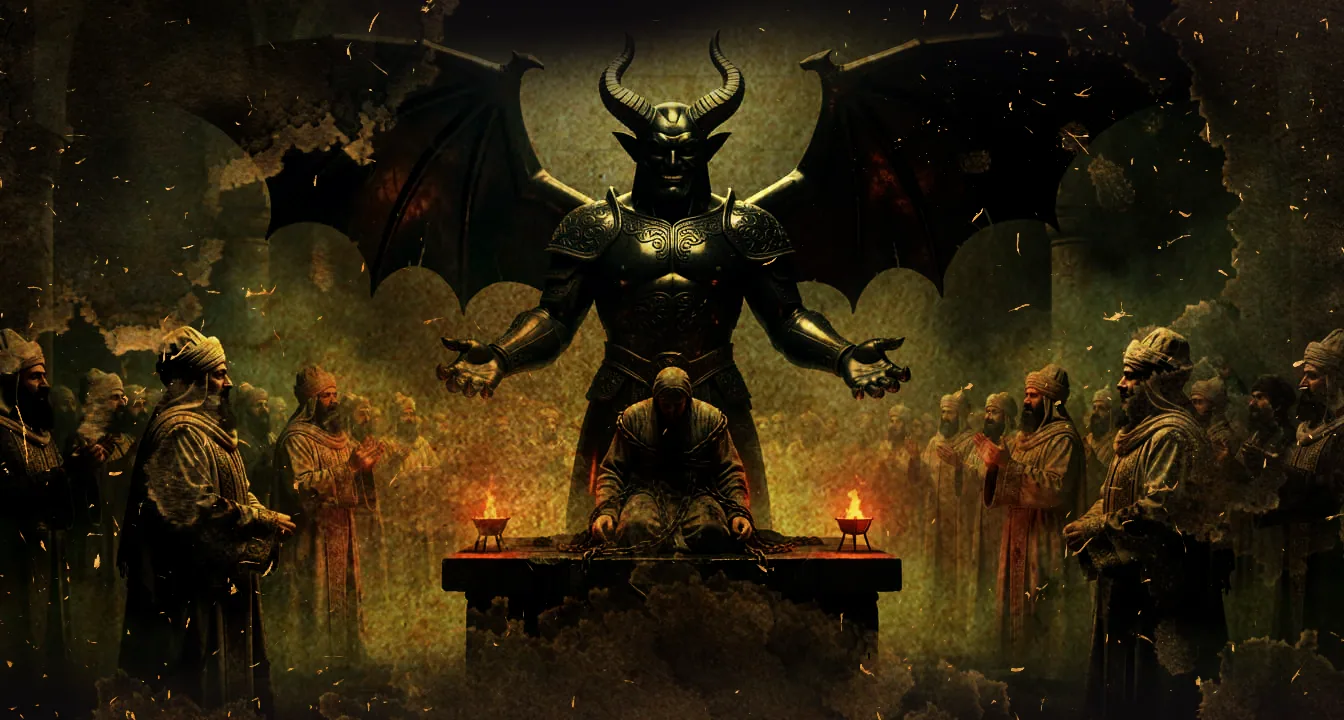
The Helkorians began as broken men during the old Numahian migrations, when Graazt crushed their spirit, corrupted them, and shaped them into his chosen people. Ylmaz Tahtir, the first Sultan, knelt before the Lord of Corruption, and from that submission Morzul’l was raised. Since then, the Sultanate has existed as Graazt’s mortal offence upon Thera. This is the land where everything serves the gathering, breaking, and offering of souls. Nothing here lasts, even the position of Great Sultan is not hereditary. He rules by the favor of Graazt, and those who deliver victory, terror, or vast tribute in soul crystals may rise to the throne. Five Sultans were slain before the latest ascension, and none among the priests called this treason. Graazt desires the strongest to rule, and in Helkor survival is accepted as abyssal patronage.
Government & Succession
Demons roam the Sultanate, but they do not rule it. They are honored, fed, summoned, feared, and appeased, but the Sultanate belongs solely to Graazt. The Great Sultan, Viziers, Janissary lords, Unholy Knights, Necromancers, and Soulbinders impose enough structure to keep the realm from collapsing by devouring itself. Beneath that topmost structure, chaos reigns like roaming wildfire. Feuds, assassinations, blood games, public mutilations, and sudden purges are common, so long as the soul tribute flows, the armies march, and no one questions the mighty Graazt.
Capital: Morzul’l
Morzul’l, the capital, is said to be among the largest and most terrible cities of Therasya. Its towers rise like black challenges against the permanent gloom, joined by hanging bridges, bronze chains, crimson banners, and vast walls adorned with the spoils of Graazt’s victories. At night, masterful colors glow across its shrines and palaces: abyssal reds and bruised violets burning from crystal lamps, soul furnaces, and demon-lit braziers. It is majestic in the way an insult to Harmony may be majestic, intriguing enough to make the eye linger before the mind understands what it is seeing.
Faith & Soul Tribute
It is a sprawl of punishment temples, crowded slave districts, shrines of red stone, breeding halls, smoke-choked markets, and open courts where souls are ripped from bodies with less ceremony than coin from a purse. Above even the palace rises Yaldaret, the Tower of Souls, where Soulbinders gather the crystals that fill Graazt’s coffers. The altar of Alktar drinks the blood of the condemned beneath the golden image of the Winged Graazt. In the lower districts, pits yawn open beneath iron grates, and the weak, the disobedient, the maimed, and the defeated are thrown alive to demons while crowds cheer from above. Captured Eladrin, Thergen, and Men are sometimes forced into cruel games beneath torchlight, hunted through maze courts or made to sing beneath blades for the amusement of nobles.
Society & Culture
In Helkor, people are not citizens in any true sense. They are stock, labor, flesh, womb, sword-arm, prayer-voice, and soul-yield. The state forces reproduction as ruthlessly as it demands labor, not for family, lineage, or love, but because numbers feed the army, the mines, and the altars. Forced breeding with demonic bloodlines has marked the population for generations, and the average Helkorian often bears some sign of corruption: small horns beneath the hair, blackened nails, ember-colored eyes, ash-gray skin, split tongues, ridged spines, patches of scale, or veins that glow faintly in darkness. Such features are read as signs of usefulness, proof that Graazt’s corruption has entered the blood and found something worth preserving.
In Helkor, people are not citizens in any true sense.
Economy & Trade
Nothing is wasted in the Sultanate. Flesh feeds war beasts, demon kennels, abyssal engines, corpse furnaces, and the dung fields that sustain Helkor’s night agriculture. Beyond mushroom farms, the land grows pale root-crops, black grain, blood reeds, bitter tubers, corpse vines, and alchemical herbs cultivated in ash and rot. Bones are ground into powder for mortar, ritual chalk, and field dust. Skin becomes parchment, drum leather, or armor lining. Even failure has a use, for a broken body may scream long enough to please a demon before it is put to further uses. Soul crystal and tribute caravans depart almost daily for Othmog.
Necromancy & Forbidden Cities
Endaret, the City of Necromancers, raises minarets into the haze-lit dark, though its greatest shame remains the loss of the grimoire stolen from Asmodeus. Helkorian necromancers still dream of reclaiming that lost book, for they believe it would revive their art beyond crude command of the dead and into true dominion over soul and flesh.
Ethos of the Sultanate
The ethos of Helkor is mercilessness. It is not the cold order of devils, nor the mindless savagery of Lienmar beasts. It is demonic oppression feeding the violent, ambitious, treacherous, and hungry, yet held together by fear of Graazt and the practical need to survive among greater monsters. The common people are so broken by hunger, ritual terror, forced service, and inherited obedience that open rebellion is almost unthinkable. The army offers the only path upward for the strong, while the priesthood claims the fanatics. The few truly gifted become Soulbinders, and the pits claim the weak. A soul has value, but unlike in devil contracts, here it is just coin. In Helkor, a Sultan’s guard may tear it from a man because he looked too long at a noble’s face.
Military
In war, Helkor is relentless. Its armies are vast, and its elite Janissaries charge beneath Graazt’s name with black steel scimitars, while necromancers curse the enemy and raise the fallen to fight again. Sayahs, the Unholy Warriors, march as dreadful commanders of the dead. Helkorian armies have burned through Starfall, threatened the Thergen cities, flooded swamps with corpses, and marched beside demons during the darkest invasions of the Spires. Yet one thorn remains lodged in Helkor’s side: Darklight, the city that has never fallen. Again and again the Sultanate has tried to break it, corrupt it, or starve it into surrender.
Foreign Relations
Although light scorched the north during recent years, Helkor endures. It has known invasion, defeat, and the wrath of the Alliance. Yet the Sultanate survives because it feeds its own weakness to the pits and divines the result as strength. It is Graazt’s promise to mortals that when people are broken beyond return, they begin to worship the hand that holds the whip. It is his anathema to Creation, a glimpse of what the South shall become if it is ever broken beneath his hooves.
“When people are broken beyond return, they begin to worship the hand that holds the whip.”
— Eolon of Oemon, from a voyage North
Main Settlements & Places of Interest
- Morzul’l — Capital of the Sultanate, one of the largest and most terrible cities of Therasya, filled with punishment temples, slave districts, red-stone shrines, breeding halls, smoke markets, demon pits, and the spoils of Graazt’s victories.
- Yaldaret, the Tower of Souls — The tower above even the palace, where Soulbinders gather soul crystals for Graazt’s coffers.
- The Altar of Alktar — A blood-drinking altar beneath the golden image of the Winged Graazt.
- Endaret, the City of Necromancers — A haze-lit city of necromancers whose masters still dream of reclaiming the grimoire stolen from Asmodeus.
- The Demon Pits of Morzul’l — Iron-grated depths where the weak, disobedient, maimed, and defeated are thrown alive to demons before cheering crowds.
- The Slave Districts and Maze Courts — Crowded quarters and cruel arenas where captives from Eladrin, Thergen, and mortal lands are hunted or forced into games.
- The Iron Mines and Soul Towers — The industrial and spiritual organs of Helkor, feeding its armies, altars, and abyssal tribute.
- The Eastern Haze Rift — A violent haze-torrent to the west of Helkor, erupting across the sea like a frenzied volcano.
- The Hangman’s Swamps and Southern War Routes — The southern approaches through which Helkorian armies have repeatedly tried to break into Starfall and the free lands.
- The Night Fields — Mushroom farms, black grain fields, blood reeds, corpse vines, pale root-crops, and rot-fed agriculture sustained by ash, flesh, and bone.
- Vazyr - The north eastern fortress city holding against Illun’s forces
- Yeldek - Birth city of the Sultan standing against the horizon of Darklight. Last bastion of Helkorian invasions, militarized and extremely fortified.
Adventure Hooks
- The Tower of Souls — A shipment of soul crystals has reached Yaldaret, and among them is the soul of a living southern hero who has not yet died.
- The Lost Grimoire of Endaret — Helkorian necromancers discover a clue to the grimoire stolen from Asmodeus, and every necromancer-lord in Endaret begins preparing expeditions, assassins, and undead hunters.
- The Games Beneath Torchlight — Captured Eladrin, Thergen, and Men are to be hunted through Morzul’l’s maze courts. The party must infiltrate the capital before the spectacle begins.
- The New Great Sultan — Five Sultans were slain before the latest ascension, and a rival backed by Soulbinders now claims that Graazt has withdrawn his favor from the throne.
- The Southern Breach — Helkorian armies are gathering near the Hangman’s Swamps, using undead scouts and demon-fed war beasts to test a forgotten route into Starfall.
- Darklight’s Thorn — The Sultanate has found a new way to infiltrate Darklight, the city that has never fallen.
- The Bloodline Census — Soulbinders begin harvesting Helkorians who show unusual signs of corruption, believing a new demonic bloodline can be forged into commanders.
- The Night Fields Rot — Something has poisoned the corpse vines and black grain, and Helkorian nobles blame southern magic. In truth, a rival demon cult may be starving the Sultanate from within.
- The Altar of Alktar — The golden image of the Winged Graazt drinks the blood of a condemned prisoner who speaks a prophecy in the voice of an Eternal.
- The Janissary Defector — A wounded Helkorian Janissary reaches the southern border carrying maps of Morzul’l, but the corruption in his blood may be a plot from Graazt.