Cord's Arm is the petrified arm of a titan who once stood upon the body of Thera — its colossal remains now forming a great wall against the demonlands of the north.
“War, blood, and sacrifice,
Bard Geozzorn · Before performing Cord's Arm on his lute · Observer Inn, Starbridge
the salvation of Harmony's creatures.
Battle, defence, and vigilance,
the price of daily survival.
Darkness beneath Theril's Shadow,
unending blackness upon the Arm,
only the radiance of heroic souls.”
Countless volumes could be written about the bloodshed upon Cord’s Arm, the dark frontier where the armies of the Southern Alliance stand against the hordes of Othmog. It is a land of perpetual warfare, a place of conquest, horror, and death, where even a brief visit can leave an indelible mark upon the soul.
Cord’s Arm is more than a border. It is the shield of the southern realms, the battlefield upon which the forces of Harmony have resisted the spreading darkness for countless Spires, holding it back just long enough for the mortal nations to survive.

The Remains of Cord
The region takes its name from an ancient myth told by the First Thergen. They claimed that the immense deposits of Erevium and the colossal masses of black stone were the titanic remains of Cord. According to their tradition, Cord was severed by his father, Theril, and his shattered body fell upon his mother, Thera, becoming part of the world itself.
The immense mountain formation known as Cord’s Arm is believed to be the actual petrified arm of the fallen Titan. It cannot be broken by conventional weapons, siege engines, mortal magic, or even the destructive soul sorcery of demons. It is not merely stone but the transformed flesh and bone of Cord, hardened beyond the strength of any natural or magically imbued material.
Within it run veins of petrified Erevium, known among the Thergen as the Blood of Cord. Erevium cannot be quarried, shaped, or controlled by ordinary craftsmen. Only trained Runecrafters can awaken and manipulate it, using the deciphered Rune of Fire once inscribed upon Cord to forge and hammer it without breaking their tools against its surface. Even then, they do not truly command the substance. They merely invoke the power to shape into rare weapons of unsurpassed quality.
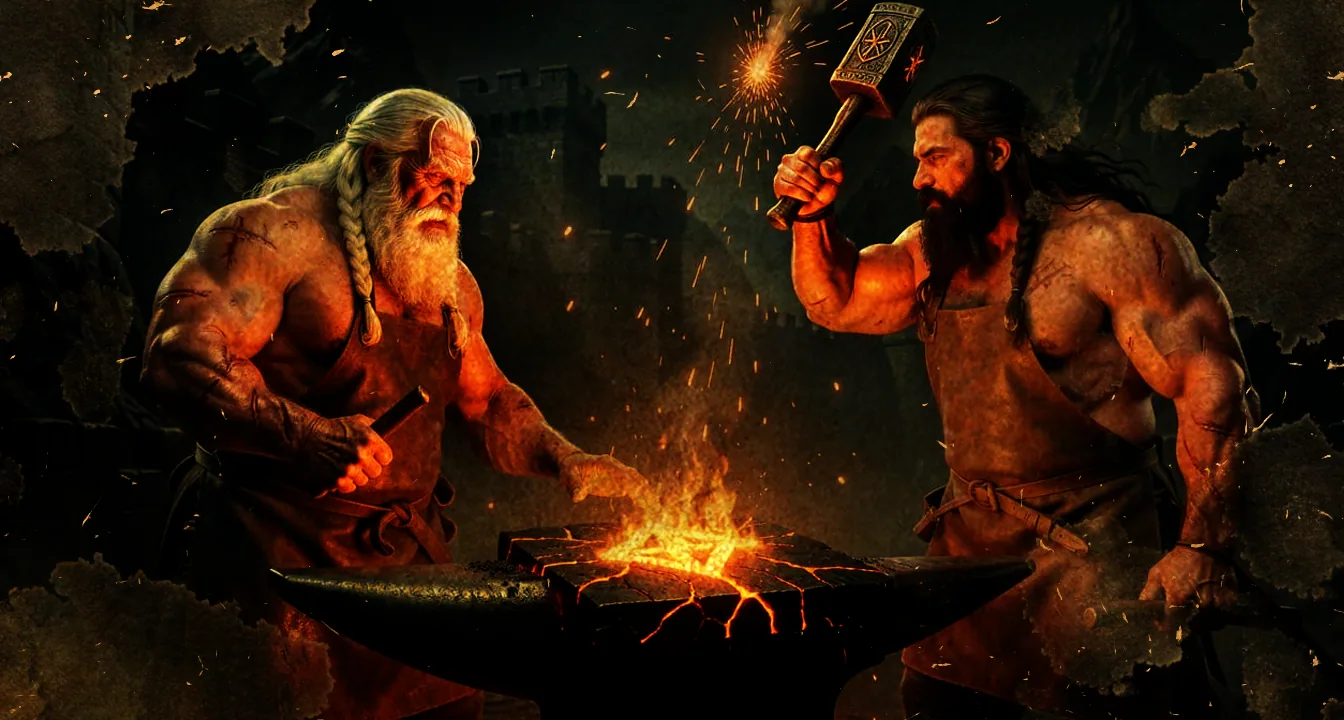
The Thergen were the first people to inhabit these lands after Cord’s destruction. They built upon the surrounding blackened stone and used it to raise towers, battlements, and immense fortifications against the armies of the Archdemons. From these strongholds, the Thergen defended the light of the southern realms against the darkness advancing from the north.
The runes carved across the surface of the Arm are older than the Thergen themselves. According to the Runecrafters, many of these markings once existed upon Cord while he still lived. They are not ordinary inscriptions but remnants of the Eternal patterns that bound his strength, purpose, and resistance to corruption. Even after his fall, these runes continue to protect the Arm. Demon magic weakens upon contact with them, curses unravel across their lines, and destructive energies are drawn into the black stone and dispersed. The Thergen later expanded these ancient markings with their own rune circles, linking forts, walls, gates, and defensive platforms into a single vast network of protection. Without these runes, even the unbreakable body of Cord might eventually be overwhelmed by the endless warmongery of Othmog.
As the Thergen Empire grew in power, Cord’s Arm remained its foremost military concern. Every emperor sent soldiers, engineers, supplies, and labourers to strengthen its defences. Fortifications were expanded, damaged structures were rebuilt, and generation after generation of warriors was sent to hold the frontier.
Following the Exodus and the signing of the Treaty of the Seed, every ruler who honours the Alliance has been required to send elite military units to the Wall. Soldiers of many nations now serve within the Arm’s cold fortresses. Some come willingly, seeking honour or vengeance. Others arrive because of duty or political obligation, but none are stationed there as punishment.
To preserve life, defend Harmony, and buy the time needed for the free nations to survive the advancing Darkness.
Regardless of their origins, all who serve upon the Wall are bound to the same purpose: to preserve life, defend Harmony, and buy the time needed for the free nations to survive the advancing Darkness. Service upon Cord’s Arm is considered the highest honour a warrior may receive. Its insignia is recognised throughout Therasya, and those who bear it bring esteem to both themselves and their family names.
The Black Passage
Cord’s Arm is a narrow passage approximately seventy miles long. It cuts through a vast mountain range composed of smooth, cracked, and slippery stone. The mountains rise in numerous overlapping levels, creating immense natural walls that are difficult to climb and nearly impossible for a large army to cross.
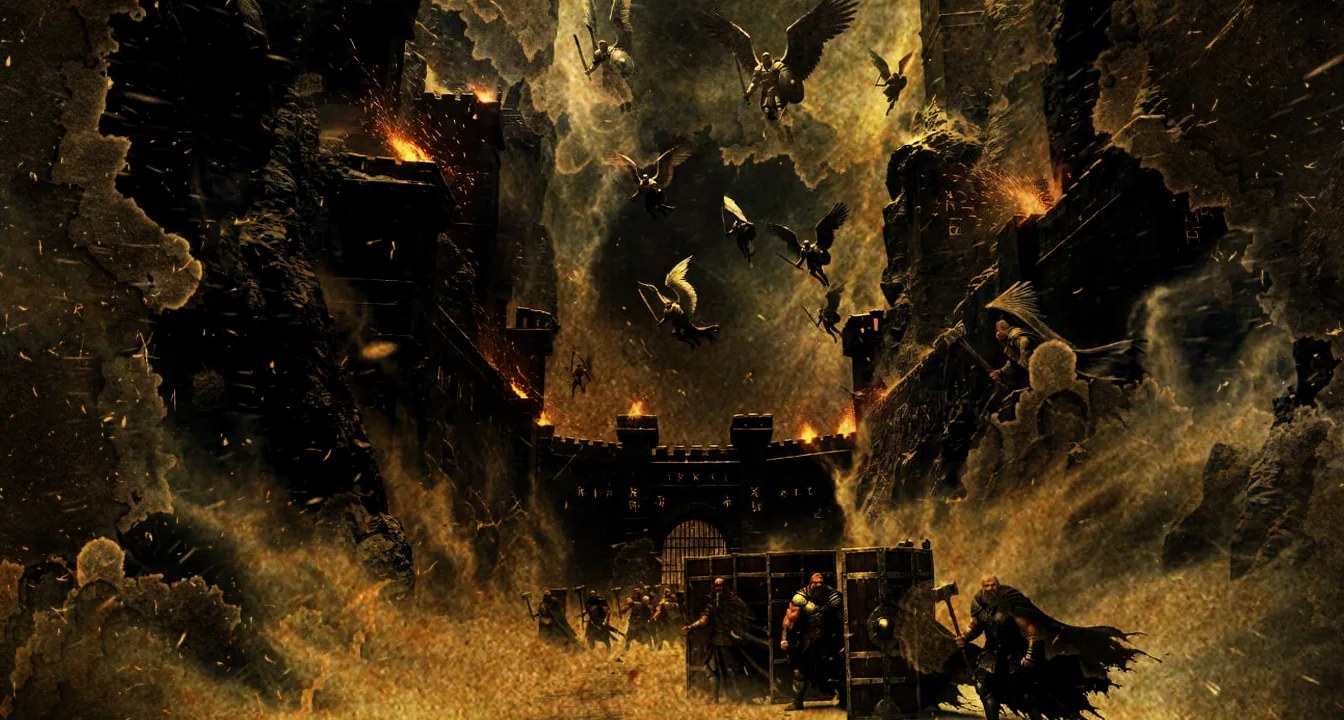
No open road leads into the expanses of Othmog. Anyone or anything seeking to bypass the passage must cross its treacherous peaks, where sheer cliffs, unstable ridges, hidden chasms, and violent winds make the journey almost impossible. Large formations cannot cross them while maintaining order, siege engines cannot be transported across them, and most creatures attempting the passage are lost long before reaching the southern side.
The Thergen emperors built their famous forts across the entire passage using stone transported from Thera’s Spine, for Erevium is exceptionally difficult to quarry or shape. Strongholds stand upon the slopes, terraces, and elevated plateaus, each supporting the defences around it. Watchtowers overlook narrow approaches, while fortified roads and concealed passages connect the major positions.
To maintain these defences, the Thergen founded the legendary Order of the Defenders, an elite brotherhood of highly trained, heavily armoured soldiers whose interlocked tower shields can withstand all but the fiercest demonic fire. Their formations are designed to hold narrow passes against enemies many times their number. Behind them stand spear lines, archers, rune-bearers, engineers, and reserve companies prepared to replace the fallen without allowing the defensive line to break.
Both ends of Cord’s Arm are enclosed by the nearly impassable Haze Rifts. These magical barriers prevent mortals and demon armies alike from easily bypassing the Arm, forcing most major invasions into the fortified passage. Entering a rift means almost certain death, and on rare occasions, survivors emerge physically mutated and mentally broken.
Beyond the Arm, miles of rocky hills, caves, and broken ridges extend toward Crag Maern and Morgal in one direction and toward Stalgar and the Zaks to the south. Mounted travel is almost impossible. Horses struggle upon the steep, uneven stone, and most Therasyan soldiers must cross the region on foot.
The Air Guild of Kinetika therefore plays a vital role in the defence of Cord’s Arm. Floating Kinetikan airships move between the highest forts, transporting soldiers, supplies, ammunition, healers, and messages where roads cannot reach. Some are broad, heavily plated carriers capable of moving entire companies, while others are swift patrol craft fitted with repeating crossbows, siege engines, and alchemical launchers. During battle, they circle above the passage, supporting troop movements, striking exposed enemy formations, and intercepting flying demons before they can descend upon the walls.
The Purpose of the Arm
Cord’s Arm is defended every day. Demons test its walls under the cover of ordinary night, sending scouts, raiding parties, flying creatures, infiltrators, and corrupted servants against its forts. These attacks are dangerous, but they are not true invasions.
During ordinary nightfall, demons may advance beneath Theril’s shadow, but they cannot commit their full armies. If they penetrate too far south, the light of the following morning will destroy them before they can establish a lasting position. For this reason, most nightly assaults are intended to press the defences, weaken the garrisons, damage fortifications, corrupt hidden passages, or discover vulnerabilities that can be exploited when Darkfall comes.
The true purpose of Cord’s Arm is revealed at the end of each Spire, when Theril casts complete Darkness upon the world. This deeper Shadowfall occurs only once every few hundred years and lasts far longer than ordinary night. During that time, the light of morning does not return to destroy the invaders, and the demon armies of Othmog can advance at full strength.
It is during these periods that Cord’s Arm must withstand the great invasions. Entire demon hosts gather before its walls, supported by Archdemons, corrupted beasts, siege horrors, and Helkorian armies. The forts are assaulted without pause, the skies fill with flying monstrosities, and the black passage becomes a battlefield stretching across every ridge, tower, and gate.
The Arm’s daily battles therefore serve as preparation for this greater war. Every patrol, repair, training exercise, and night assault is part of the long struggle to ensure that, when complete Darkness returns, the Arm will still be ready.
Life Upon the Arm
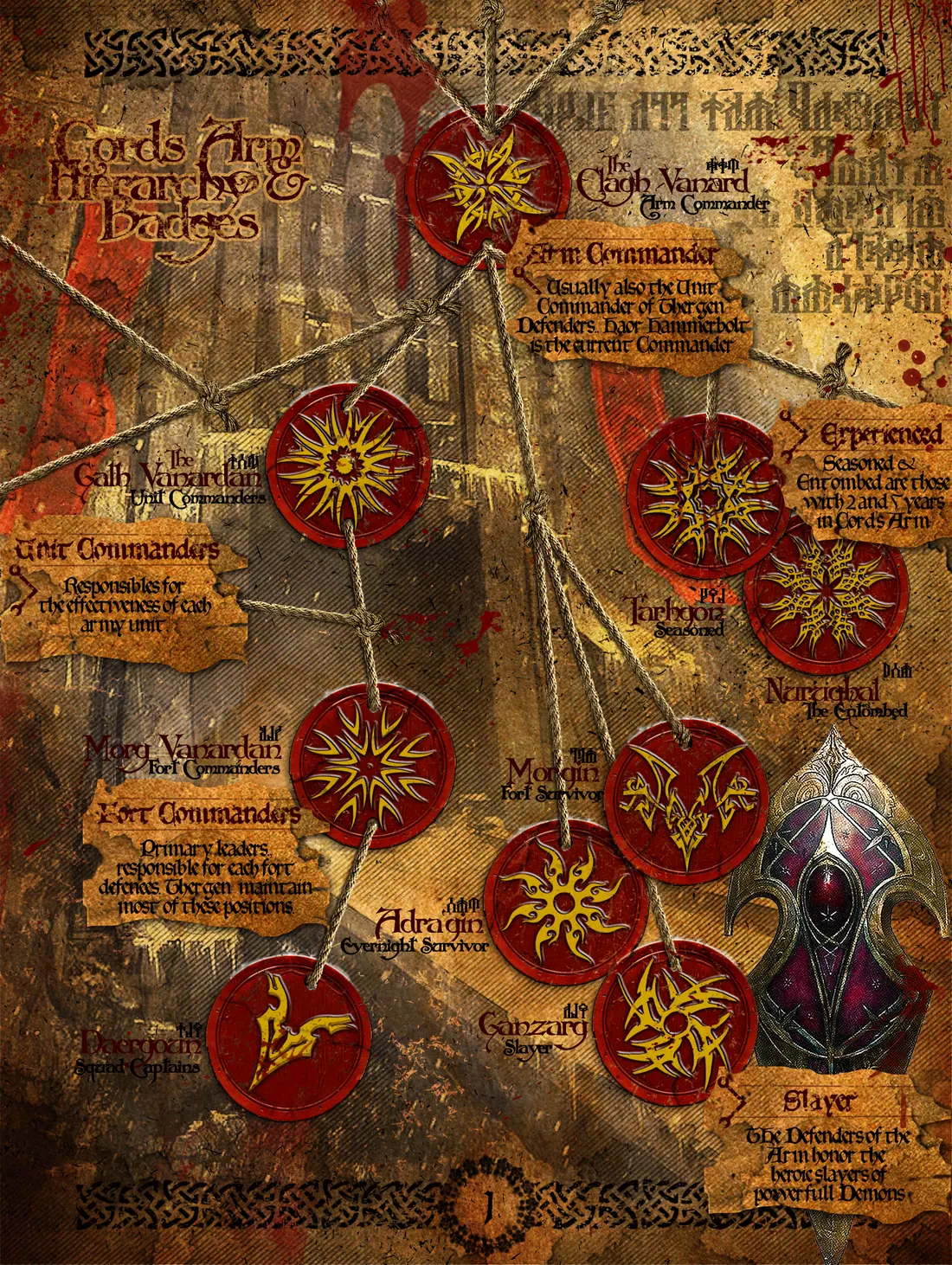
Because the Thergen hold the highest commands of the Arm, their strict military hierarchy governs nearly every aspect of life there. Rank determines authority not only during battle but also within the forts, roads, settlements, supply camps, and military courts.
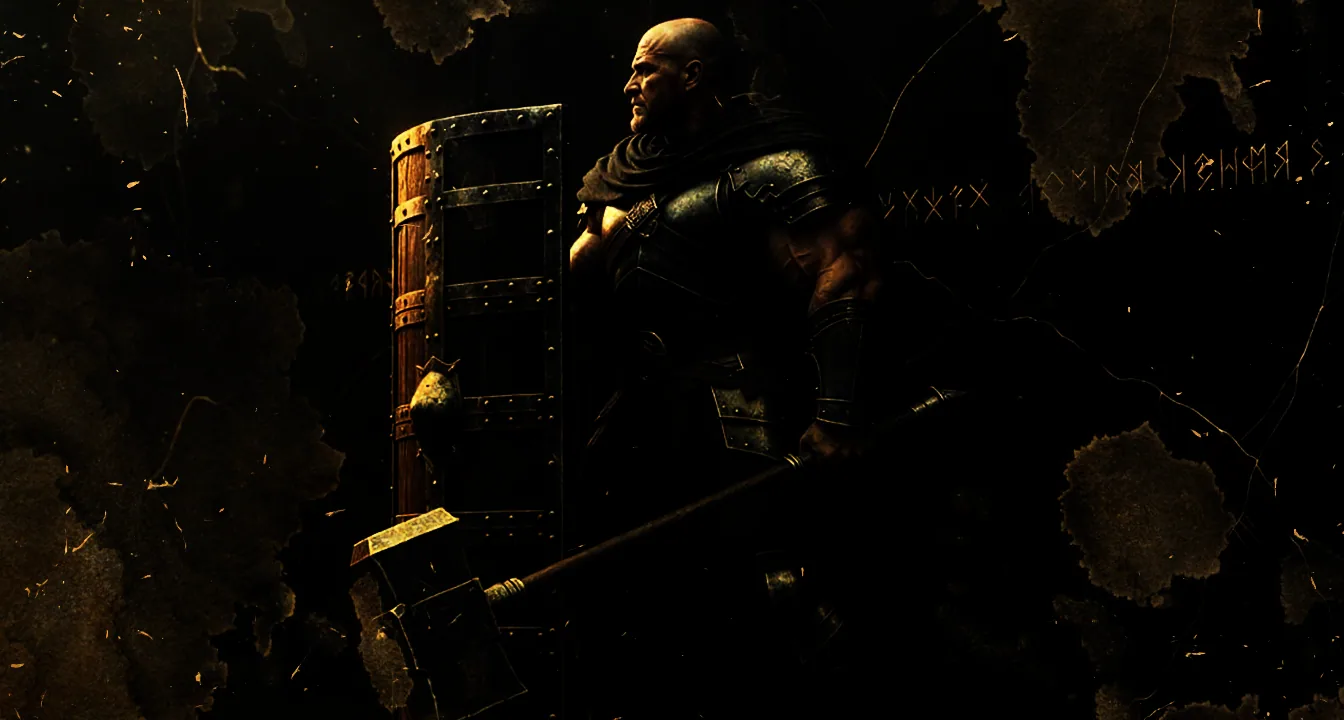
Orders are expected to be obeyed without hesitation. A delayed response can cost a fortress, and its loss can expose the southern realms to invasion. At the time of this account, the supreme commander of the defending armies and the highest military authority, known in the Thergen tongue as the Clagh Vanard, is Haor Hammerbolt.
Beneath him in the command hierarchy, several non-Thergen officers command their respective detachments. These forces include a full Avaton phalanx, regiments of Dymarthian archers led by the Falcon Knights, wizards of Arcanum and Elemendia, Feyan strike teams, Erenorian bannermen, templars of Heraldon, Lydorian spear-maidens, Kinetikan crossbowmen, Andorian heavy infantry, Starfall rangers and even Pale Fey swordmasters.
These armies do not fight as a single uniform force. Each brings its own leadership, traditions, tactics, and methods of warfare. The Avaton phalanxes hold the widest passages with disciplined shield walls alongside the Defenders. The Dymarthian archers occupy elevated terraces and rain arrows upon advancing hordes. Arcanum and Elemendian wizards reinforce the forts with wards, counter enemy magic, and unleash destructive elements against siege formations.
Feyan strike teams move beyond the main walls, attacking enemy commanders and supply lines before disappearing into hidden routes. Erenorian bannermen strengthen morale and rally broken units. Heraldian templars guard shrines, hospitals, and sacred positions, while Lydorian spear-maidens defend narrow stairways and breaches where larger formations cannot operate.
Kinetikan crossbowmen fight from towers, airships, and mechanical platforms, supported by engineers who maintain lifts, gates and artillery. Andorian heavy infantry form the reserve forces used to reinforce failing sections of the line. Pale Fey swordmasters are sent against supernatural champions and creatures resistant to ordinary weapons, while Starfall rangers patrol the outer ridges, tracking infiltrators and detecting enemy movements far beyond the walls.
Above them, Kinetikan airship captains command separate aerial formations, coordinating patrol craft, transport vessels, and heavy warships. Their officers must respond not only to the Clagh Vanard but also to the Air Guild’s own chain of command, making cooperation essential during major battles.
Angelic battalions stand among these mortal armies. Their presence is both a military advantage and a symbol that Harmony has not abandoned the defenders. Together, these forces form a living mosaic of faith, will, discipline, and defiance.
The Meaning of Cord’s Arm
To outsiders, Cord’s Arm may appear to be little more than an immense collection of dark walls and mountain fortresses, but to the people who serve there, it is a sacred obligation.
Every battlement bears the scars of previous assaults. Every fortress holds the names of the dead. The stones have been further scarred by fire, demon ash, and the passing of innumerable armies, yet their strength remains untouched beneath the destruction.
Legendary heroes have walked these walls, knowing that their deaths might purchase only a few more days of safety for people they would never meet. Cord’s Arm remains standing because generation after generation has chosen to defend it.
“Each night, its warriors pray to the Eternals as one, each speaking in their own mother tongue, a chorus of life against chaos. At the end of each Spire, they stand against the full might of Othmog while hopelessness descends upon the rest of the world. They hold steady in the certainty that dawn will come and the free nations will rise again.”
As spoken nightly upon the Wall